AI Agents for smart manufacturing: tackling data chaos and making data science accessible
In today's production, there are highly automated, networked systems and regular monitors full of data in between. The challenges for machine operators and maintenance remain invisible. More and more machines are being assigned to a decreasing number of employees in production, who at the same time are faced with software landscapes that have grown over the years and contain machine parks of different generations - if one component fails, expert knowledge is required, otherwise the entire production can come to a stop.
Under these conditions, many companies in the manufacturing industry are also confronted with current structural challenges, such as an increasing shortage of skilled workers and complex work processes. Employees need in-depth specialist knowledge of many different systems and heterogeneous production facilities. Solutions are often already available - but hidden in different systems. A holistic overview is often lacking.
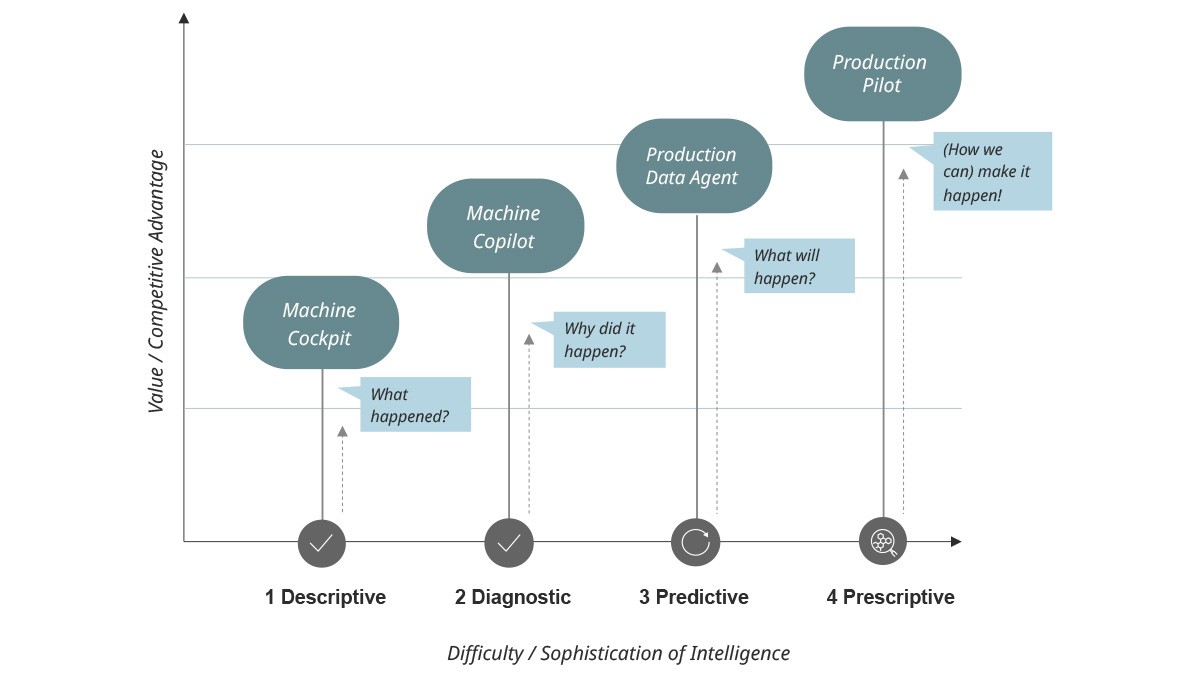
Our strategic path to Operating Intelligence
In order to gradually establish Operating Intelligence on the shopfloor, our experts follow the four-stage Data Ascendency Model according to Davenport/Harris and MESA International. The stages show a systematic approach from pure data visibility through to automated optimization.
The four stages:
- Descriptive Analytics answers the question "What happened?"
- Diagnostic analytics gets to the bottom of "Why?"
- Predictive analytics dares to forecast "What will happen?"
- Finally, prescriptive analytics provides specific recommendations for action - "How can we bring about the best possible solution?"
For every stage of Operating Intelligence, we develop tailored solutions that provide transparency and facilitate analysis.
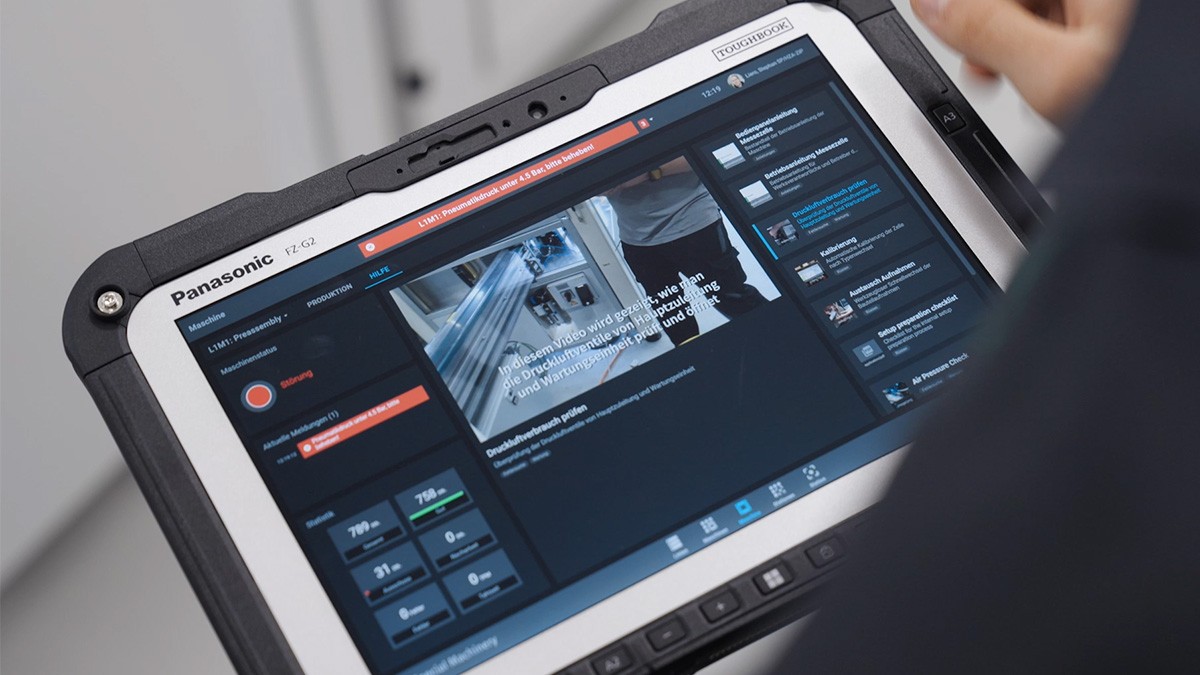
Machine Cockpit: The foundation of data visualization
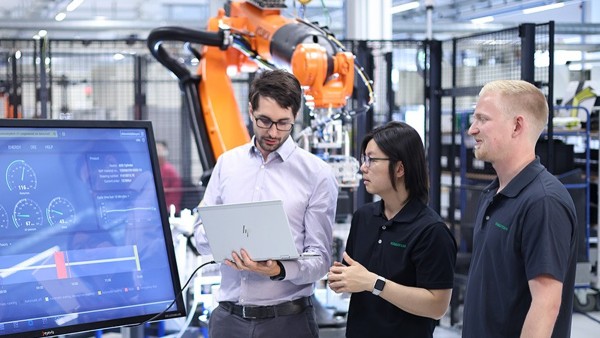
With the Machine Cockpit, store floor employees have a central information hub for all relevant data on the operation of the production line: cycle times, error messages and troubleshooting tips. Fast, intuitive and focused on the essentials, the actual needs of production employees were the basis for developing the cockpit. This means that all important information about the operation of the system is available at a glance.
Machine Copilot: AI-supported diagnostics
If irregularities occur during machine operation, visualized data is not always sufficient to answer the crucial question of "why". Our Machine Copilot supplements the cockpit with AI-supported diagnostic functionalities. With access to machine manuals and historical data, the Machine Copilot analyzes current values and proactively points out anomalies. This information and knowledge is available to all employees at the machine.
Production Data Agent: data science for the shopfloor
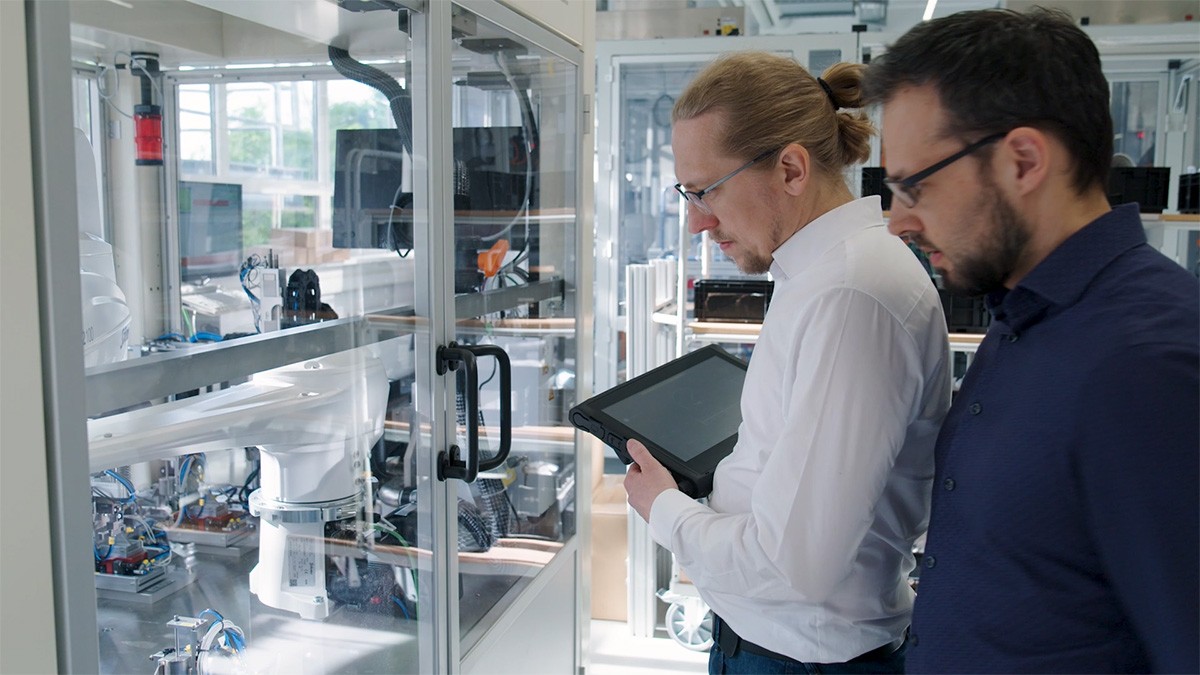
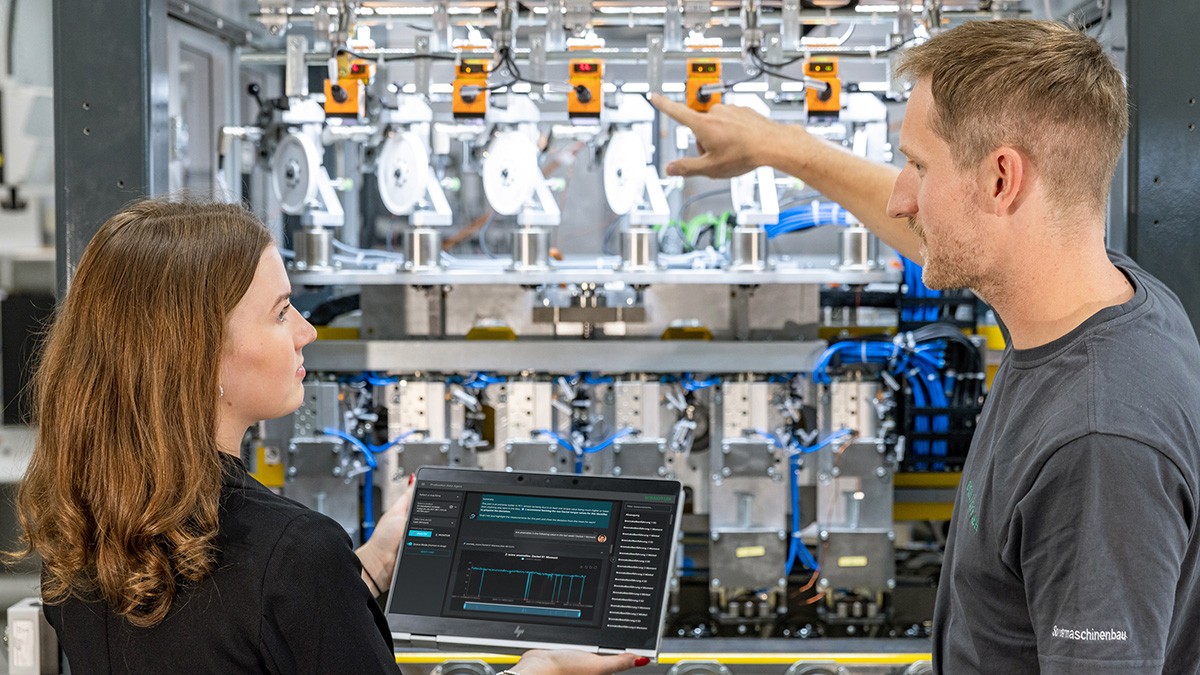
The next evolutionary stage for carrying out complex analyses is our Production Data Agent. Without having to be a data scientist, production employees can formulate and analyze their problems.
AI plays a central role here - experience with production teams has shown that root cause analyses across different machines, require expert knowledge of which statistical method is suitable to answer the question. Data accessibility alone is not enough here. Our Production Data Agent closes the interface in the natural interaction between people and the production system.
Employees bring their knowledge of the process with them and can describe their questions in their own language. The Production Data Agent supports them in formulating their questions, independently identifies suitable analysis methods and translates the results into easy-to-understand answers and visualizations. Anyone who knows the production process and can formulate the problem can analyze it - without programming knowledge or extensive training. In this way, we enable employees and combine the best of both worlds: The teams' process knowledge with the new possibilities offered by AI. Our decentralized organization is the basis for rolling out machine learning and AI across plants without having standardized all data structures; our systems adapt to the existing data.
Machine learning on the shopfloor - hurdles and solutions
To unleash its full potential, we believe that the foundations must be in place at every level of analysis. AI can facilitate the higher entry level today but cannot replace it. Reliable visualization is the first step in identifying diagnostic needs - and without sound root cause analysis with human expertise, predictions remain uncertain.
In addition, machine learning is not yet widely accessible and data is still documented in analog form, so the real opportunity for widespread use in production today is not only due to a lack of technology or knowledge, but also practical conditions such as grown machine parks or limited budgets are the biggest obstacles to the use of AI.
Our Production Data Agent provides a pragmatic solution: data science and machine learning that can be used immediately on existing systems without major conversions. And for new systems, we supply data that is high-quality and standardized right from the start.
Outlook Stage 4: From co-pilot to pilot - autonomous control through AI
Today, our AI systems are co-pilots - in the future, they will gradually develop into autonomous pilots that act independently within the framework of defined scenarios. The role of production employees will change to co-pilots with a monitoring function: they will maintain an overview and make decisions in unusual situations. The principle is "Human in the Loop" - it describes the active involvement of humans in automated processes for checking, correcting and approving results.
The use of AI in production today is not a question of technology - but of the right approach. Our Production Data Agent shows that data science and machine learning are accessible without expert knowledge. By first understanding the problem and then developing the right solution, AI is not an end in itself, but a real tool for people in production.
Are you interested?

Contact our digital solutions team at Special Machinery and find out how you can use AI agents to create transparency, simplify processes and make decisions faster.